Modern dating often asks the face to speak before the person gets a word in.
Before a voice is heard. Before a joke lands. Before values are understood. Before kindness, curiosity or emotional intelligence have any opportunity to appear.
A photograph is presented and expected to earn the right to a conversation.
Within seconds, a person is accepted or dismissed.
Odasiti is asking what might become possible if physical appearance entered the story later.
Not because physical attraction is unimportant. It is.
Not because love must remain blind forever. It does not.
But because a human being may deserve the opportunity to become more than a photograph before appearance becomes part of the decision.
What Love Is Blind helped the world imagine
Netflix’s Love Is Blind brought a powerful question into popular culture:
Can people form a meaningful emotional connection without seeing each other first?
Participants speak from separate pods and build relationships through conversation alone. Those who form a strong enough connection may become engaged before meeting face-to-face for the first time.
The programme has created drama, debate and countless conversations about attraction, vulnerability and compatibility.
Its success points to something deeper than an appetite for reality television.
People are fascinated by what happens when appearance is no longer given the opening move.
They want to know whether conversations become more honest. Whether vulnerability arrives differently. Whether emotional attraction can develop before physical attraction is tested.
Love Is Blind turned that question into a global television experiment.
Odasiti is exploring what it could mean in everyday life.
The problem is not attraction
Odasiti is not trying to prove that physical appearance does not matter.
For many people, physical attraction is an important part of romantic compatibility. When two people finally meet, the way they respond to each other may influence whether the connection continues.
Odasiti does not deny that reality.
It changes when that reality enters the story.
Visual-first dating asks:
“Do I like what I see enough to discover who this person is?”
Odasiti asks:
“Now that I have begun to understand who this person is, what happens when we finally see each other?”
The difference is not the removal of attraction.
It is the sequencing of discovery.
Appearance still gets a voice. It simply does not get to speak first.
A question that should not belong only to television
There are natural similarities between Love Is Blind and Odasiti. Both explore connection before appearance. Both create an element of mystery. Both recognise that conversation can reveal dimensions of compatibility that photographs cannot.
But they are not the same experience.
Love Is Blind gives a selected group of participants the opportunity to explore connection before appearance within a produced environment.
Odasiti is built around the question:
What if singles everywhere could choose to experience connection before appearance for themselves?
It is a guided relationship platform for people living real lives, following their own timelines and making their own decisions.
There is no compulsory engagement before meeting. No prescribed journey towards marriage. No single definition of what a successful connection must become.
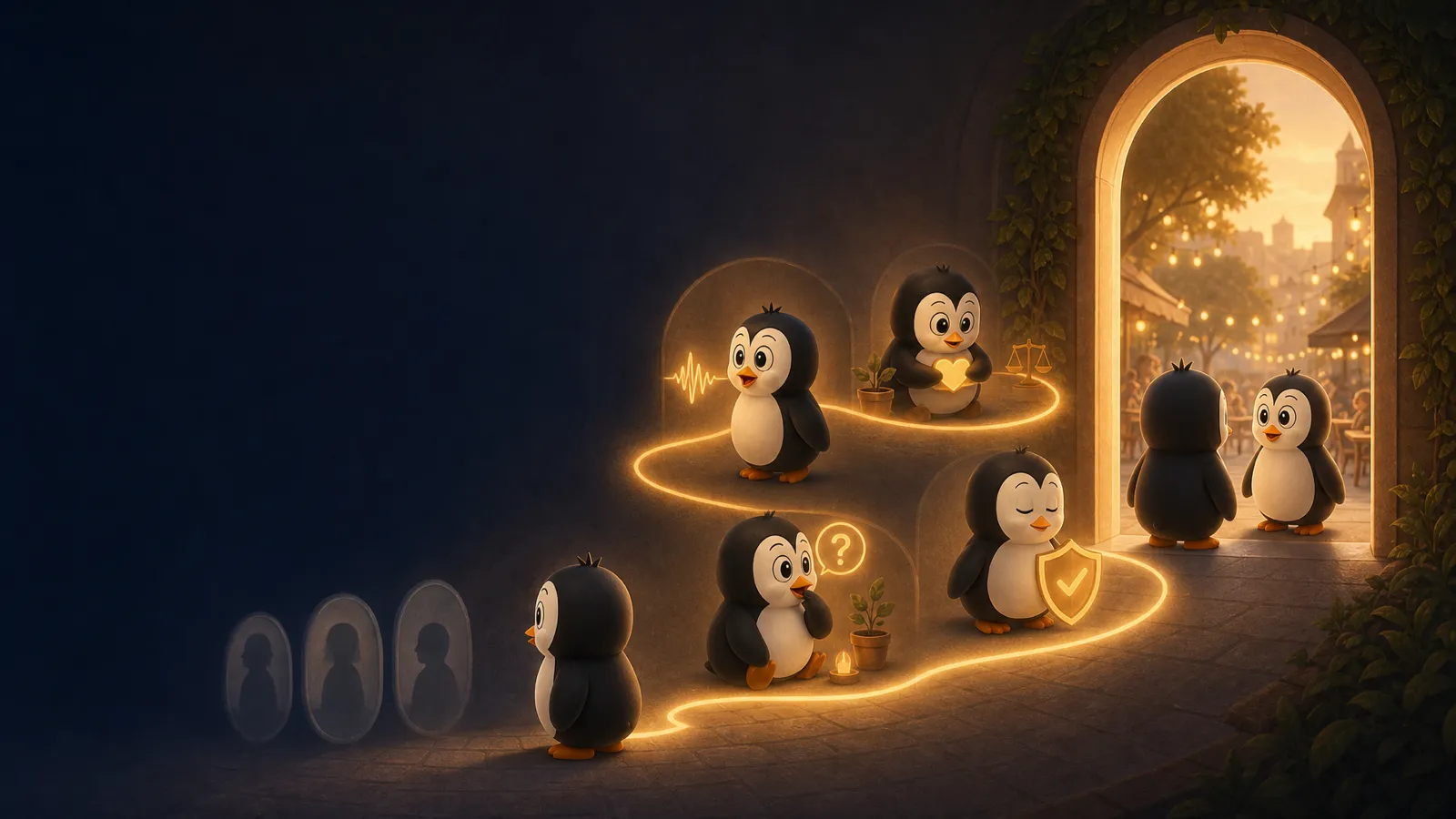
Members are given a structured pathway through which curiosity can become conversation, conversation can build trust, and trust can eventually lead to a mutually chosen meeting.
The platform provides structure.
The members provide the meaning.
More than a blind date
Traditional blind dates often begin with very little shared history.
Two people may be introduced by a friend, exchange a few messages and meet without knowing whether they have much in common.
Odasiti takes a more deliberate approach.
Members begin without profile photographs determining who receives attention. Instead, guided interactions help them explore how another person thinks, communicates and approaches important areas of life.
They can discover values before visual presentation.
They can hear a voice before seeing a face.
They can experience humour, thoughtfulness, curiosity and disagreement before deciding whether to meet.
The relationship is not automatically assumed to be romantic simply because two people have entered the same space. Nor is progression guaranteed.
It depends on continued interest, mutual participation and consent.
The platform can create better conditions for connection.
It can slow down premature judgement.
It can make room for parts of a person that photographs cannot capture.
But it cannot decide what two people must feel.
The Reveal changes everything
Eventually, appearance enters the story.
In Odasiti, that moment is the Reveal: the first time two members meet and see each other in person.
The Reveal is where emotional understanding meets physical reality.
It is not merely the moment when a face becomes visible. It is the moment when everything the members have discovered about one another is brought into the same room.
A familiar voice now belongs to a person standing before them.
A shared joke has an expression.
A thoughtful answer has eyes.
A growing connection becomes real in an entirely new way.
For some members, the Reveal may be a relaxed meeting over coffee.
For others, it may become a deeply meaningful milestone.
It may be quiet. It may be romantic. It may be celebratory. It may become a story they share with the people closest to them. It may become a moment they remember for the rest of their lives.
Odasiti's role is not to determine how significant that occasion must be.
The members should.
Odasiti provides the pathway. The members create the story.
The moment belongs to them
This is one of the most important differences between an entertainment format and a member-directed platform.
Entertainment must create a story for an audience.
Odasiti exists to help members create a story for themselves.
The Reveal does not belong to an algorithm, a producer or a predetermined outcome.
It belongs first to the two people experiencing it.
Some may want the moment to remain entirely private.
Others may want to share or commemorate it.
Some may approach it as a first date.
Others may arrive already believing they have found someone extraordinary.
There is no need to place an artificial ceiling on what that moment could become.
The platform’s responsibility is to ensure that progression remains mutual, safety-conscious and consent-led.
What happens within those boundaries should be shaped by the members themselves.
What happens when they finally meet?
Odasiti must also be honest about what happens next.
An emotional connection does not guarantee physical chemistry.
Two people may admire each other’s values, enjoy their conversations and still discover that romantic attraction is not present when they meet.
That possibility does not make the journey meaningless.
On a conventional dating platform, someone may be rejected before their personality has been given any opportunity to contribute.
On Odasiti, members reach the Reveal knowing more than what a collection of photographs could have told them.
The person standing before them is not merely a face.
They are also a familiar voice, a shared laugh, a revealing answer, a difficult conversation handled with maturity, or a moment of vulnerability received with care.
Appearance still matters.
It simply arrives with context.
Some connections will deepen.
Some will change.
Some will end respectfully.
Odasiti cannot promise that every journey will become love.
The purpose is to offer people a different way to discover whether love, or another meaningful form of connection, might be possible.
What Love Is Blind asks, and what Odasiti asks next
Love Is Blind asks whether an emotional connection can survive the arrival of physical reality.
Odasiti begins with another question:
Should appearance be allowed to decide whether a connection receives the chance to exist at all?
Modern dating has become remarkably efficient at displaying people.
Whether it has become equally effective at helping people understand one another is a different matter.
Photographs communicate appearance quickly. But speed can encourage people to treat human beings as interchangeable options within an endless catalogue.
Changing the sequence interrupts that pattern.
It creates a pause between discovering that a person exists, and deciding whether their appearance meets an immediate visual preference.
Within that pause, other information can emerge:
How do they make you feel during a conversation?
Do they listen?
Can they make you laugh?
Are they curious about your world?
Do your values align?
Can you disagree without diminishing one another?
Do you look forward to hearing their voice again?
None of these questions make appearance irrelevant.
They allow attraction to become multidimensional.
From Love is Blind to Love unseen
Perhaps the real question is not whether love is blind.
Perhaps love does not need to be blind at all.
Perhaps it only deserves the opportunity to begin before everything is visible.
Love Is Blind demonstrated the cultural power of that possibility. It showed that millions of people are fascinated by the idea that emotional connection might develop before physical appearance is revealed.
Odasiti takes that curiosity into the hands of singles everywhere.
Not by guaranteeing love.
Not by pretending physical attraction does not matter.
Not by deciding what the Reveal must look like.
And not by prescribing what the relationship must become.
Odasiti simply offers another sequence:
Discover the person.
Build the connection.
Meet when both are ready.
Then decide what the story becomes.
Love does not have to stay blind.
It may simply deserve the chance to begin unseen.
Odasiti is an independent dating and connection platform. It is not affiliated with, endorsed by or connected to Netflix, Love Is Blind, Kinetic Content or their respective producers.
Sources
- Love Is Blind (Netflix)
Related perspectives
Media contact
Odasiti Team
media@odasiti.com